01
Air Leakage
Drafts and uncontrolled airflow through walls, roof decks and building joints.


Closed-cell spray polyurethane foam (SPF) roofing and commercial spray foam insulation are WW Construction & Roofing's specialty. Every project starts with an assessment of the existing roof and building, so spray foam is only recommended where it fits. Serving the Texas Panhandle & surrounding areas, including the Oklahoma Panhandle and eastern New Mexico.
Closed-cell spray polyurethane foam is applied as a liquid and expands into a continuous, seamless layer across the roof deck. Because it's sprayed in place, it conforms to the roof surface and wraps around penetrations, curbs and rooftop equipment without the seams and laps found in many other roof systems.
Where the existing roof is a suitable candidate, spray foam can be installed as a roof restoration or recovery over many existing roof substrates after problem areas are corrected. It also adds insulation to the roof assembly, and it's finished with a protective coating system that shields the foam from UV exposure and weather.
Request a Commercial Property AssessmentFoam is sprayed as one continuous layer that adheres to the substrate and seals around penetrations and details.
When the existing roof is suitable, spray foam can be applied over it after wet, damaged or failed areas are addressed.
The foam layer adds insulation to the roof assembly at the same time it forms the roof surface. The R-value added depends on the foam thickness installed.
A coating is applied over the foam to protect it from sunlight and weather, and can be maintained over time.
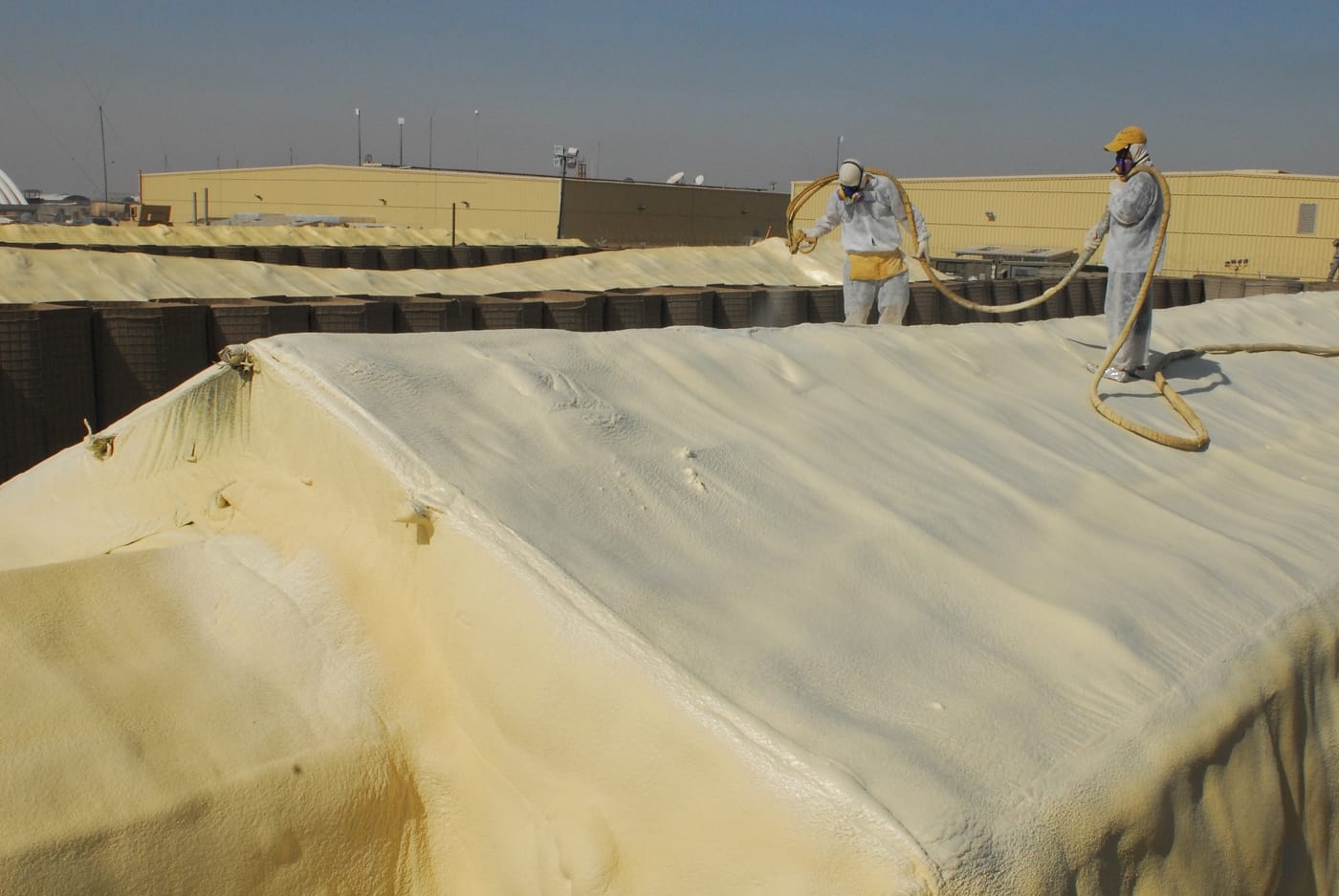
Inside the building, closed-cell spray foam provides commercial insulation that also helps seal gaps, seams and air leaks in walls, roof decks and other building surfaces. It's sprayed directly onto the substrate, so it can follow irregular framing, purlins and metal panels.
WW installs closed-cell spray foam insulation in commercial buildings including:
Depending on the building and its existing conditions, spray foam roofing or insulation can be part of the solution to these common commercial building problems.
Drafts and uncontrolled airflow through walls, roof decks and building joints.
Moisture forming on metal roof panels, walls and framing, dripping onto equipment, inventory or floors.
Spaces that are hard to keep comfortable or consistent for workers, processes, livestock or stored goods.
Openings around pipes, conduits, curbs, framing and rooftop equipment that are difficult to seal.
Existing roofs that are aging but still suitable for a spray foam restoration or recovery after repairs.
Missing, damaged, sagging or inadequate insulation in commercial and metal buildings.
Start with an on-site commercial property assessment. We'll look at the roof and building and tell you whether spray foam makes sense.
Spray foam isn't the right answer for every roof or every building. Before recommending it, WW evaluates the existing roof, the substrate and the building conditions to determine whether spray foam roofing, spray foam insulation, both or a different approach makes the most sense.
If the existing roof isn't a good candidate, we'll tell you, and explain other options such as repair, replacement or a roof coating system.
Request a Commercial Property AssessmentInspect the existing roof, substrate, drainage, penetrations and building-envelope conditions.
Photograph and document existing conditions and problem areas.
Explain whether spray foam fits the roof, the insulation need, or both, and what prep work is required.
Correct problem areas, apply the spray foam and finish roof systems with a protective coating.
Request a commercial property assessment and WW will evaluate the roof and building before making a recommendation.
WW works with commercial property owners, facility managers and property managers across a wide range of building types throughout our service area.
Spray polyurethane foam (SPF) roofing is applied as a liquid that expands into a continuous, seamless layer of closed-cell foam on the roof. It conforms to the roof surface, wraps around penetrations and curbs, adds insulation to the roof assembly and is finished with a protective coating.
Often, when the existing roof is a suitable candidate. Wet, damaged or failed areas have to be addressed first, and the substrate has to be suitable for the foam to adhere. WW evaluates the existing roof, substrate and drainage before recommending a spray foam roof.
The coating protects the foam from sunlight and weather. Polyurethane foam breaks down under UV exposure if it's left uncoated, so the coating is part of the roof system and should be inspected and maintained over time. Spray foam roofs can be added to a maintenance program.
It can help. Closed-cell foam applied to metal roof panels and walls insulates the metal surface and seals air leaks, which can reduce the condensation that forms when warm, moist air reaches cold metal. Results depend on the building, how it's used and how it's ventilated, so WW evaluates the building first.
WW installs closed-cell spray foam insulation in warehouses, metal buildings, shops, manufacturing facilities, agricultural buildings and other commercial properties across the Texas Panhandle and surrounding areas.
Closed-cell spray foam adds insulation value (R-value) to the roof or wall assembly, and the amount depends on the thickness installed. WW can discuss the right foam thickness for your building, roof and insulation goals during the assessment.
Tell us about your building, your roof and any insulation, condensation or air-leakage concerns. We'll follow up to schedule an assessment.
Your assessment request has been sent to WW Construction & Roofing. For anything urgent, call (806) 273-8555.
Residential roofing is also available. While our focus is commercial roofing and building services, WW Construction & Roofing also provides residential roofing. Call to discuss your home.
Call (806) 273-8555